With the world’s youngest population, Africa stands at a pivotal moment. Its growing working-age population has the potential to drive economic growth, innovation, and social transformation – an opportunity referred to as the demographic dividend, which arises when the proportion of working-age people grows relative to dependents, creating a window for accelerated economic development. But realizing the potential of Africa’s demographic dividend will require investments in reproductive health, education, youth and women’s empowerment, social protection and essential services including water, sanitation and hygiene (WASH).
Neglected tropical diseases (NTDs) are a significant barrier to unlocking the potential of Africa’s demographic dividend. Africa carries the highest burden of cases of these 21 diseases in the WHO regions, that often affect impoverished communities where the demographic dividend is the highest. NTDs are a cross-cutting development issue, intersecting with reproductive health, WASH, education and other issues. They keep children out of school and young people out of work, limiting productivity and long-term growth.
Several NTDs intersect directly with Africa’s working-age population. Lymphatic filariasis affects people in their productive years, with associated conditions like hydrocele reducing income, deepening stigma, and increasing household costs. Onchocerciasis reduces adult productivity, affects livelihoods, and disrupts schooling and family wellbeing. Female genital schistosomiasis is a hidden reproductive health burden that affects women’s wellbeing, stigma, reproductive morbidity, and community behaviour. NTD elimination supports human capital development, gender equity, safer communities, and the broader demographic dividend agenda.
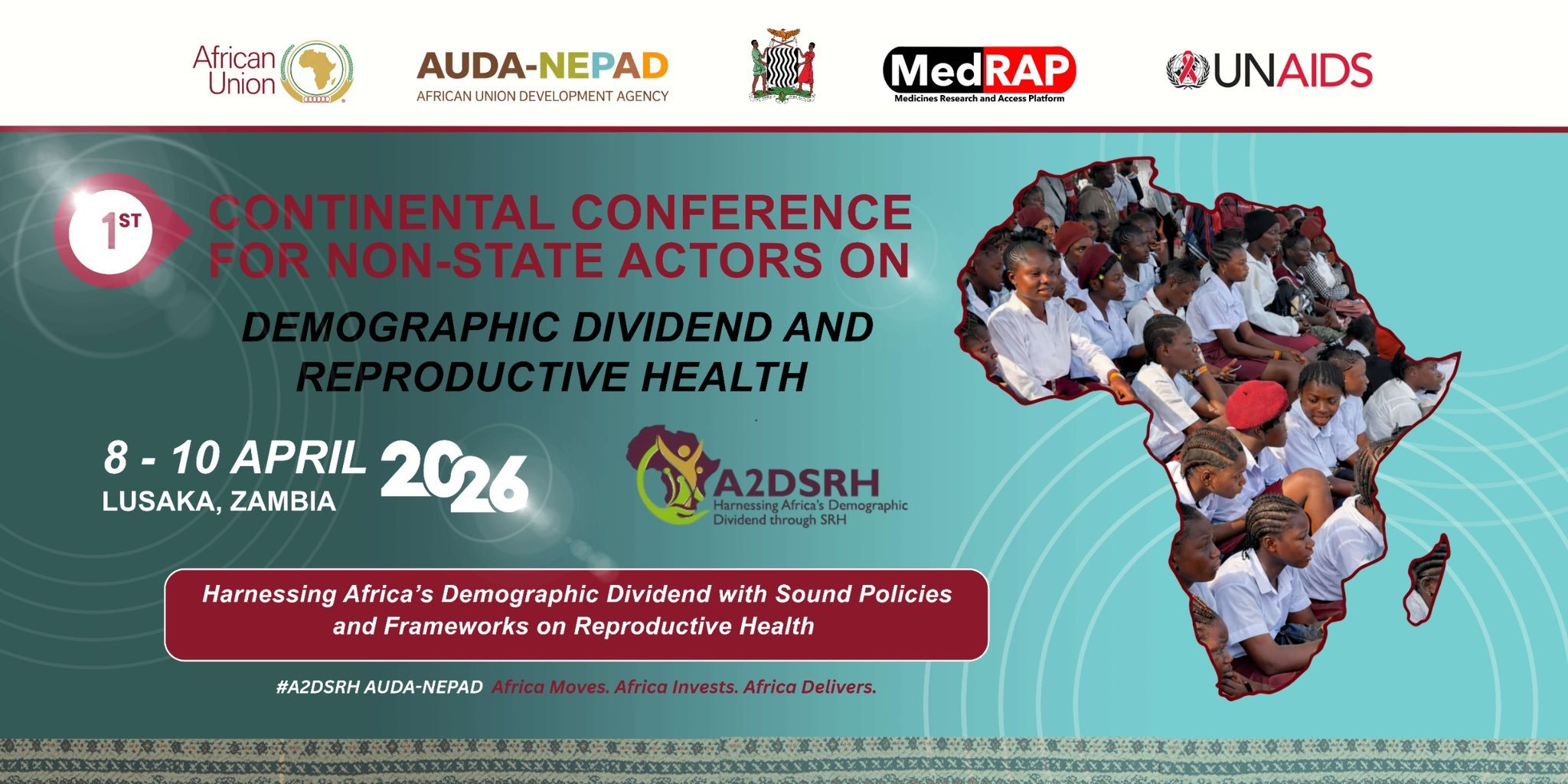
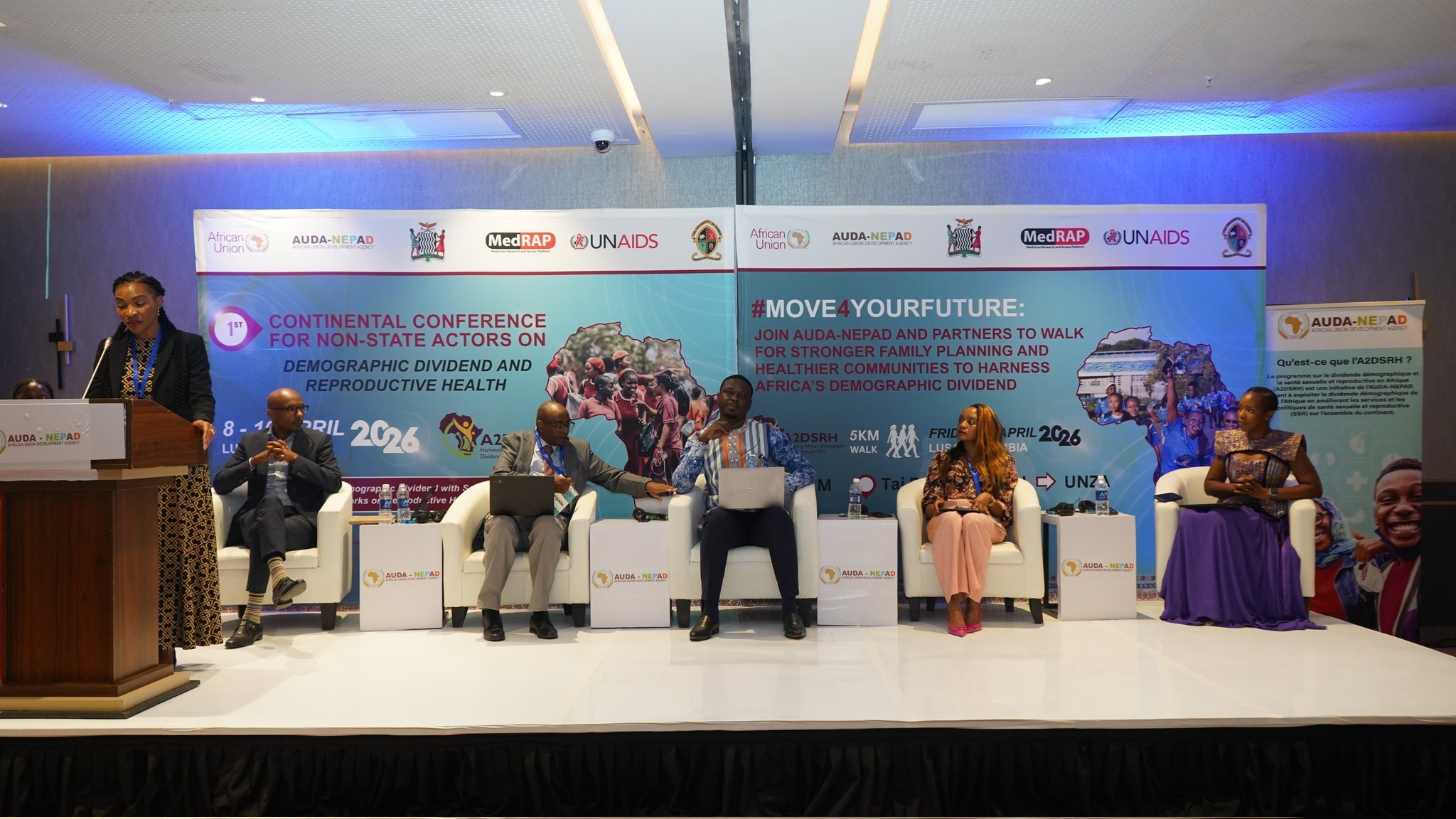
The African Union Development Agency (AUDA-NEPAD) 1st Continental Conference for Non-State Actors on Demographic Dividend and Reproductive Health was held in Lusaka, Zambia from 8-10 April 2026. It brought together non-state actors, including civil society, faith-based organizations and other stakeholders to accelerate Africa’s demographic dividend through coordinated policy advocacy, program alignment, South-South Cooperation-based knowledge sharing and social protection initiatives. At the conference, Uniting to Combat NTDs and the AUDA-NEPAD’s Human Capital and Institutional Development directorate introduced participants to the AFRISHIELD platform. This platform looks to connect NTD elimination to broader development outcomes including stronger primary health care, safer water and sanitation, community-centred delivery, and practical partnership-building with non-state actors.
Domestic resource mobilization for NTD elimination was also showcased as part of the presentation by Uniting and AUDA-NEPAD. Uniting’s Senior Resource Mobilization Advisor, Ruth Rensburg, emphasized that this is a moment to scale domestic financing for NTDs. Integrated investment across health and development platforms can leverage the opportunity of the demographic dividend and deliver outsized returns for countries. NTDs already deliver strong returns on investment and the demographic dividend has the potential to multiply that return. They are not just a health investment, but a catalyst for economic growth.
A key outcome of the conference was the Lusaka 2026 Call to Action for Non-State Actors that was presented to the United Nations at the end of the conference. This Call to Action recognizes the inextricable links between water, sanitation and hygiene (WASH) access, reproductive health outcomes, NTDs, and the realization of Africa's demographic dividend. It calls for bold, coordinated and sustained investments and action in health systems, advocacy and funding towards comprehensive demographic dividend development, WASH systems, and NTD elimination.
As awareness of these linkages continues to grow, the next step will be to consider how the sector can more deliberately integrate NTDs into demographic dividend and reproductive health efforts, translating recognition into sustained advocacy, investment, and action.