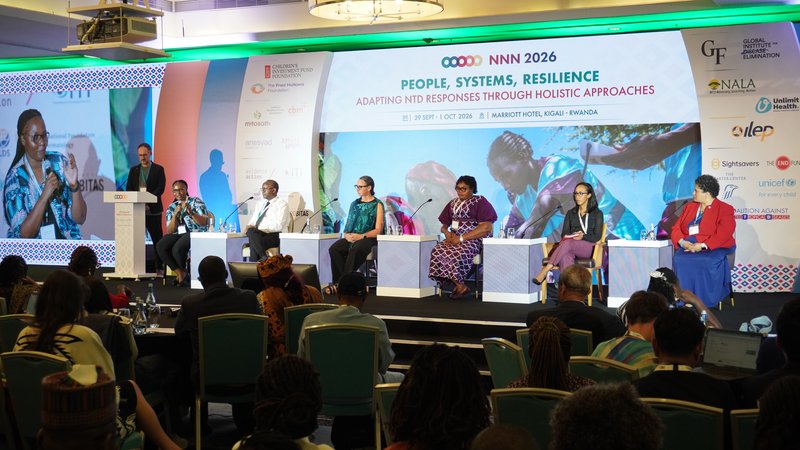
The global neglected tropical disease (NTD) community convened in Kigali, Rwanda, from September 29 to October 1 for the NNN 2026 Annual Conference. Convened by the NTD NGO Network, this year’s theme - "People, Systems & Resilience: Adapting NTD Responses Through Holistic Approaches" - underscored a vital shift in global health: eliminating NTDs requires far more than technical solutions. It demands political leadership, equity, health system integration, and long-term sustainability.
At the opening plenary marking the midpoint of the WHO NTD Roadmap 2021–2030, Dr. Maria Rebollo of the World Health Organization’s Global Malaria and NTDs Programme presented progress from the Mid-Term Review and invited partners to assist endemic countries in compiling critical data ahead of the review’s completion and launch in late 2026.
Joining the panel discussion to share country, community, and partner perspectives, Uniting to Combat NTDs’ Ruth Rensburg emphasized that a "whole-of-government" strategy - mobilizing cross-sectoral resources and political support - is essential to secure sustainable elimination. The panel’s underlying message was stark and unequivocal: for far too many individuals, the gap to diagnosis, treatment, and care remains unacceptably wide.
Throughout the event, high-level plenary sessions were paired with practical, disease-specific workshops. A major focus was cross-cutting integration, featuring dynamic interventions designed to embed NTD prevention, control, and treatment directly into national health systems. During a fast-paced 'Flash Talk Marketplace', 16 speakers representing African country programs and global organizations presented innovative approaches. Participants then engaged in interactive group discussions to define what true health system integration looks like, establishing foundational insights for an upcoming NNN Community of Practice.
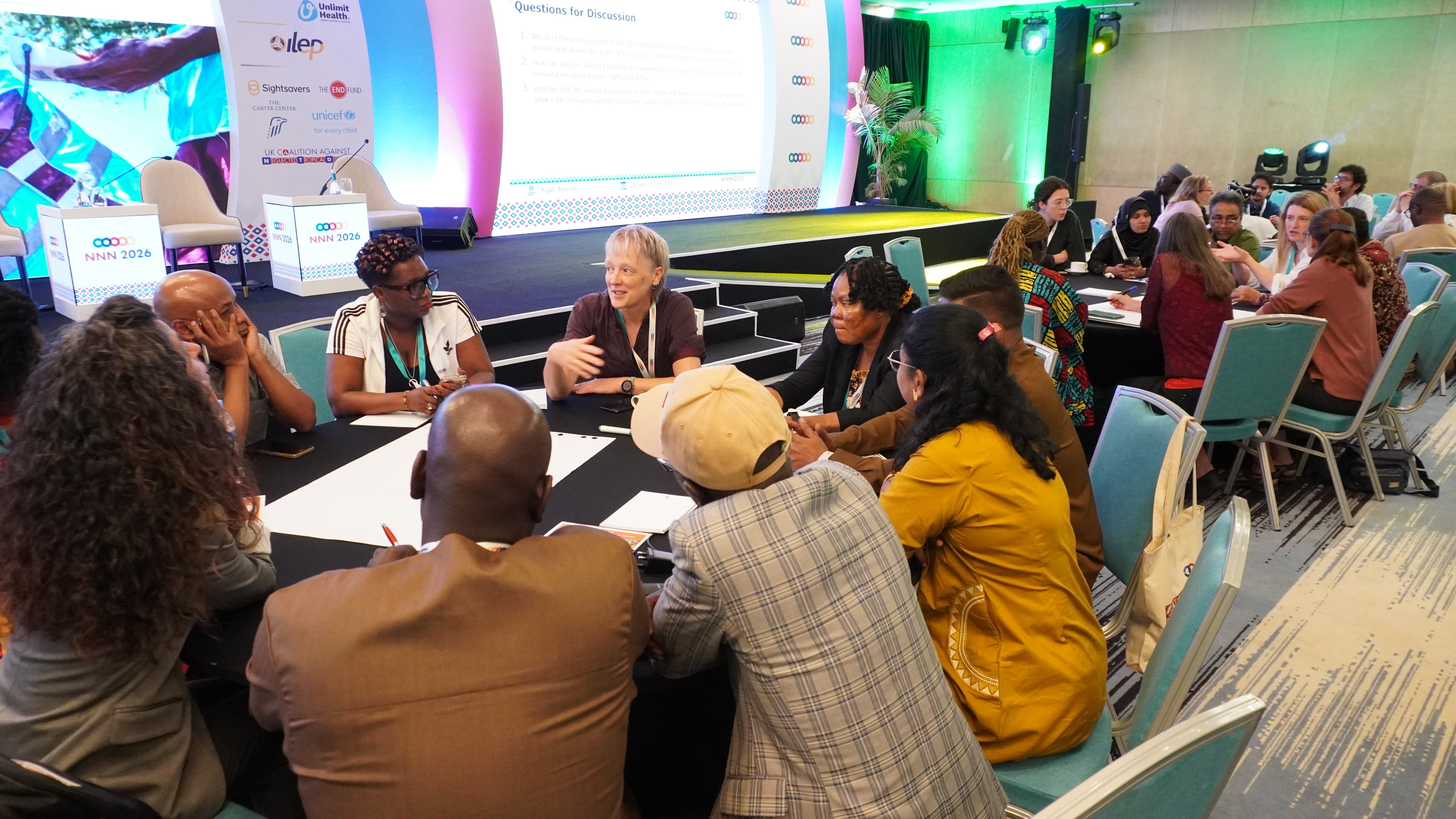
Human rights and person-centered care also took center stage. In a session with the Leprosy Working Group, Ines from Anesvad introduced the UN Human Rights Council resolution on Human Rights and NTDs - a landmark milestone establishing institutional pathways for sustained global attention and rights-based standards. Attendees explored practical strategies to incorporate lessons from the Special Rapporteur on Leprosy into the upcoming OHCHR report, ensuring that individuals affected by NTDs are meaningfully represented throughout the consultation process.
A special plenary organized by GLIDE showcased locally led innovation in action, featuring projects funded by the GLIDE Falcon Award for Disease Elimination. Awardees presented scalable initiatives across domestic advocacy, sustainable financing, peer-learning networks, and youth engagement. Dynamic audience challenges prompted participants to grapple with pressing questions on how to safeguard elimination achievements amid shifting global priorities and funding constraints.
To wrap up the conference, the NNN Secretariat hosted an energetic "Working Group Speed Dating" session designed to break down siloes and foster cross-disciplinary collaboration among disease-specific and cross-cutting groups. The conference concluded with the announcement of Deborah Mensah from Hope Rises International as the new NNN Vice-Chair.
As the global NTD community looks toward the 2030 Roadmap goals, the insights from Kigali deliver a powerful message: sustainable elimination cannot be achieved in isolation. By championing country-owned leadership, embedding NTD services within broader health systems, and prioritizing rights-based, person-centered care, we can build the resilient health systems needed to reach every last person. Uniting to Combat NTDs remains steadfastly committed to supporting these holistic approaches, working alongside partners worldwide to ensure that ending neglected tropical diseases remains a shared global priority.