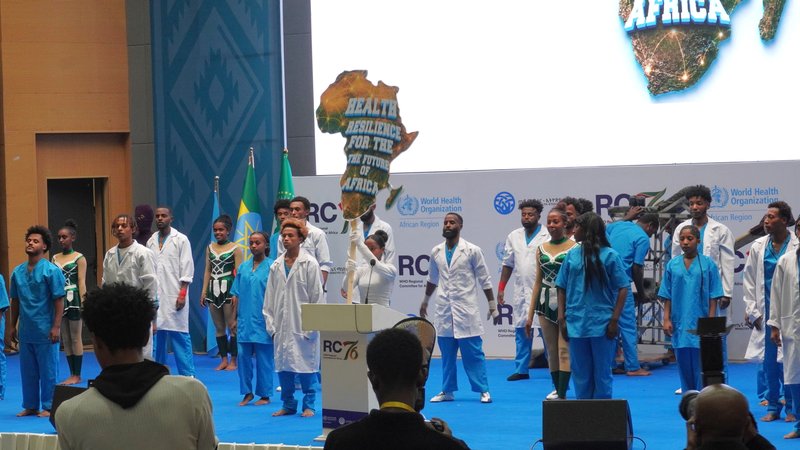
Perfomers presenting a skit at the opening ceremony of the 76th WHO AFRO Regional Committee meeting in Addis Ababa, Ethiopia
James Ochweri/Uniting to Combat NTDs
From the historic streets of Addis Ababa, the 76th session of the WHO Regional Committee for Africa (RC76) served as a powerful reminder of the continent's resilience and its ambitious trajectory toward a healthier future. This year’s gathering celebrated the tangible, hard-won successes in disease elimination that are reshaping public health across Africa and identified the concrete action needed to sustain these gains, ensuring that disease elimination remains a priority within the broader health development agenda.
At the opening ceremony of the meeting, held at the Adwa Victory Memorial in the heart of Addis Ababa, opening remarks by WHO Director-General Dr. Tedros and WHO African Regional Director Prof. Janabi highlighted recent landmark achievements, including trachoma elimination in Burundi and Senegal, and the elimination of sleeping sickness in Kenya.
Financing the Future of Health
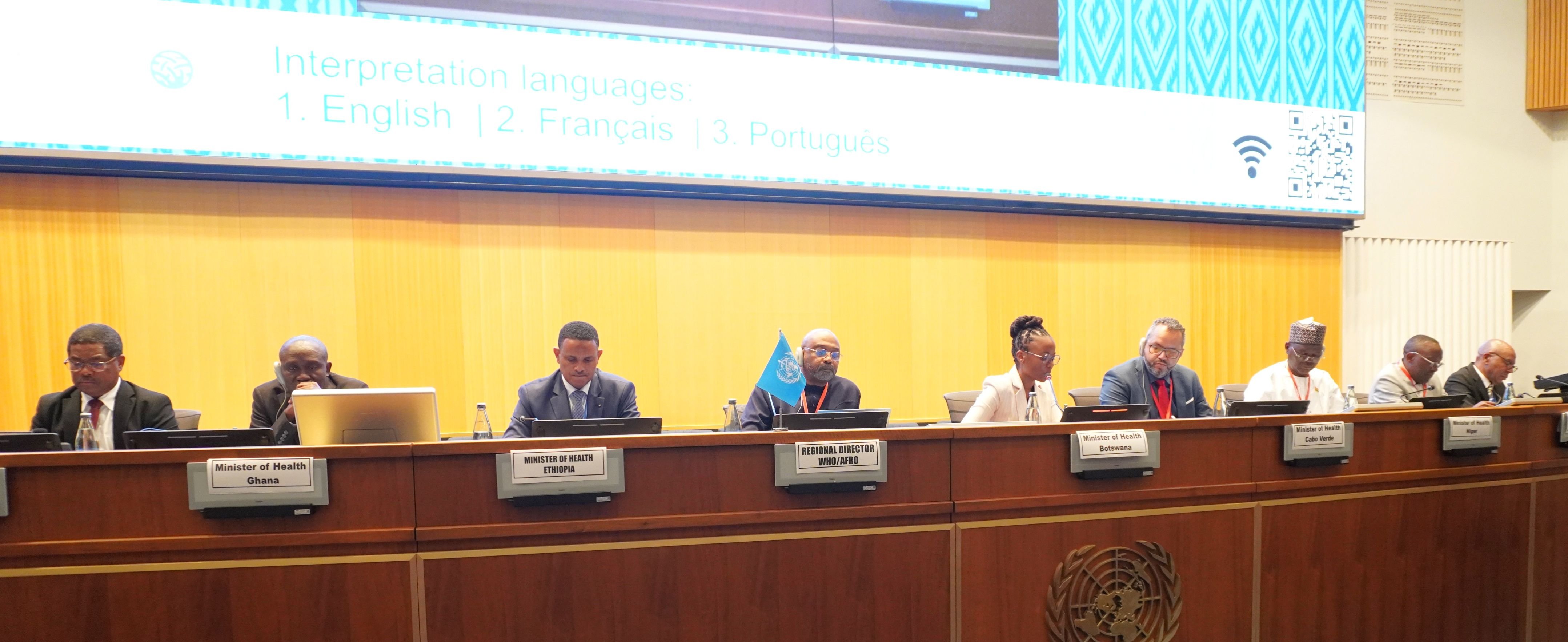
A critical session on the new Strategy for Financing the Future of Health in the WHO African Region 2026–2035 addressed the fiscal pressures facing African health financing. In a statement made at the session, UTC underscored that the UN Human Rights Council Resolution on NTDs offers a powerful platform for health ministers to secure domestic investment. By framing NTD elimination as a cross-government driver of education, equity, and economic development, countries can better position themselves to transition away from external donor dependency.
James Ochweri/Uniting to Combat NTDs
Celebrating Milestones in Multi-Disease Elimination
A side event on multi-disease elimination highlighted the continent's progress despite an increasingly complex operating environment, characterized by climate change and fluctuating funding. Twenty-two of the 47 countries in the region have successfully eliminated at least one NTD. Forty-one countries are now free of Guinea Worm. Speakers emphasized that maintaining these gains requires political will, strong institutions, and strategic shared investment.
The session culminated in a ministerial-endorsed call to action on protecting and accelerating multi-disease elimination in Africa, outlining four key pillars: sustaining political leadership, protecting gains, fostering cross-sectoral collaboration, and strengthening regional solidarity. It highlights the region's shared commitment to safeguarding progress and maintaining disease elimination as a top priority. The call to action urges countries to adopt integrated strategies that bolster primary health care, delivering broad outcomes across multiple health programs rather than relying on isolated, disease-specific interventions.
James Ochweri/Uniting to Combat NTDs
Diplomatic Engagement for Action
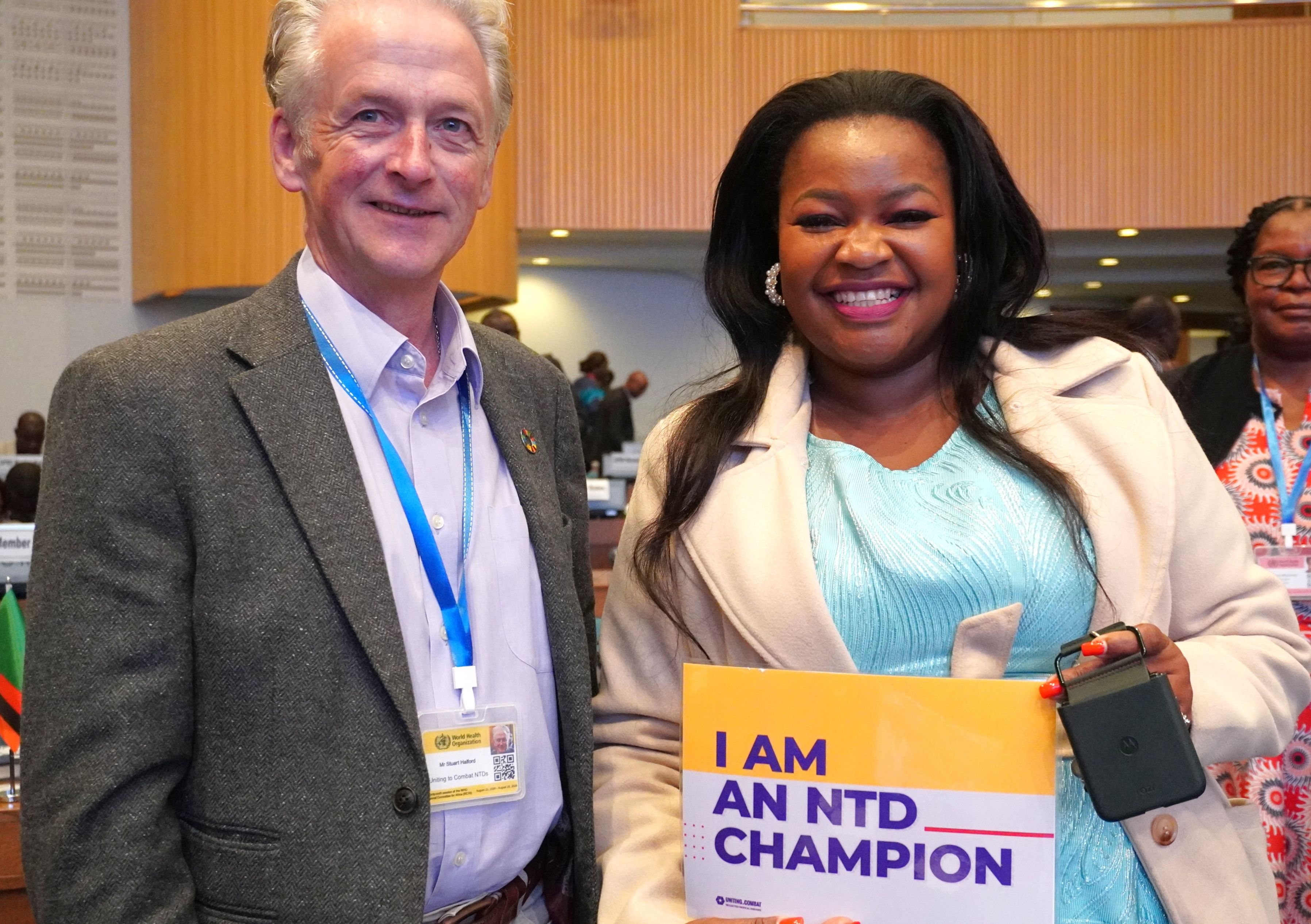
Throughout the week, the UTC team engaged in high-level bilateral discussions with delegations from over 20 countries, including Malawi, Nigeria, Ghana, Tanzania, and Ethiopia, as well as key regional bodies like Africa CDC and WHO-ESPEN. These discussions focused on operationalizing the UN HRC resolution on Human Rights and NTDs and accelerating domestic resource mobilization efforts to ensure sustainable financing. The team will continue to follow up these discussions with the aim of strengthening collaboration, optimizing regional funding proposals, and aligning strategic approaches to resource mobilization with partners.
A Pivotal Moment
As the curtain closes on #RC76AFRO, the energy and consensus in Addis Ababa underscore a pivotal moment for health in Africa. The newly endorsed call to action, anchored in sustained political leadership, sectoral collaboration, and regional solidarity, provides a clear roadmap for the region’s efforts to integrate multi-disease elimination into primary healthcare. By transforming these commitments into sustained investment and action, the region is not only poised to protect its hard-won gains but is also setting a bold precedent for a more resilient, self-reliant future where disease elimination is treated as a non-negotiable priority for every citizen.